In autumn, it is emphasized that "radish is better than ginseng after autumn". It is a manifestation of Chinese health wisdom not to blindly use ginseng, cattle and sheep and other ingredients for strong supplements or to cook with radish. Radish can not only spiciness and lung qi, relieve the cold, but also help the spleen to transport and transform, smooth the qi and digest food, and produce body fluids. It has unique effects in dealing with autumn and winter cold and food accumulation.
In autumn, it is emphasized that "radish is better than ginseng after autumn". It is a manifestation of Chinese health wisdom not to blindly use ginseng, cattle and sheep and other ingredients for strong supplements or to cook with radish. Radish can not only spiciness and lung qi, relieve the cold, but also help the spleen to transport and transform, smooth the qi and digest food, and produce body fluids. It has unique effects in dealing with autumn and winter cold and food accumulation.
White radish is cool in nature, why should it be eaten only when it is cold?
White radish is cool in nature and sweet and spicy in taste. It has the effects of clearing heat and producing body fluids, lowering qi and widening the middle, and appetizing and strengthening the spleen.Many people find that eating some white radish in autumn and winter will make our bodies feel very comfortable.
Li Shizhen, a medical scientist in the Ming Dynasty, highly praised radish and advocated eating it at every meal, saying that radish can "greatly lower qi, digest food and harmonize the middle, and expel evil heat" (Compendium of Materia Medica).
However, white radish is cool in nature, so why is it good for the body to eat it in autumn and winter? There are two reasons:
First, it can reduce internal heat
In autumn and winter, people tend to be "heat-oriented". Although the heating and hot wind make the body feel comfortable, a lot of internal heat is naturally accumulated in the body, and it is necessary to reduce it with cool food such as radish.
Second, it can adjust the diet
When the weather gets cold, people will unconsciously increase their meat intake, which is easy to cause food stagnation and internal heat. At this time, from the perspective of food balance, eating some radish can adjust the heat in the diet.
In addition, white radish is rich in vitamin C and trace elements, which can help the body enhance immunity.In autumn, children and the elderly with weak constitutions are prone to catching colds. At this time, eating some white radish can not only replenish water, but also prevent diseases.
There are differences between eating white radish raw and cooked
Eating raw - promoting fluid and moistening the lungs, clearing heat and detoxifying
Eating radish raw is suitable for people with dry mouth and tongue, dry eyes, constipation and yellow urine.
If you have a sore throat or tonsillitis after the beginning of autumn, drinking raw radish juice can relieve the discomfort; people with oral ulcers can also use radish juice to rinse their mouths.

Cooked radish can relieve gas, digestion, phlegm and stagnation
Cooked radish can be used to relieve the discomfort caused by weak spleen and stomach, abdominal distension caused by food accumulation caused by eating too much, abdominal distension caused by constipation due to insufficient gastrointestinal motility, abdominal distension caused by cold, and cough caused by phlegm.
1. Eating raw is particular
The taste of each part of the white radish is different, and the way of eating is also different. You must choose the right part when eating raw.
Reminder: People who don’t like to eat cold food or have weak spleen and stomach function should eat cooked food.
Radish head: From the top of the radish to 3~5 cm, there is less water and the texture is very hard. It is suitable for shredded stir-frying and making soup. It can also be used with mutton for stuffing. The taste is excellent, but it is not suitable for eating raw.
Middle part of radish: The middle part of radish has more sugar content, greater sweetness, crisp and tender texture. It is the best part of the whole radish, so it is suitable for eating raw.
Radish tail: The part below the middle of the radish to the tail contains more amylase and mustard oil, and the taste is spicy, which can help to strengthen the stomach and digest food. If you like the spicy taste of radish, you can choose to eat this part raw, or pickle it into dried radish for consumption. People who can't accept the spicy taste can choose to stir-fry, stew or make stuffing to reduce its spicy taste.
2. Cooked food with heavy matching
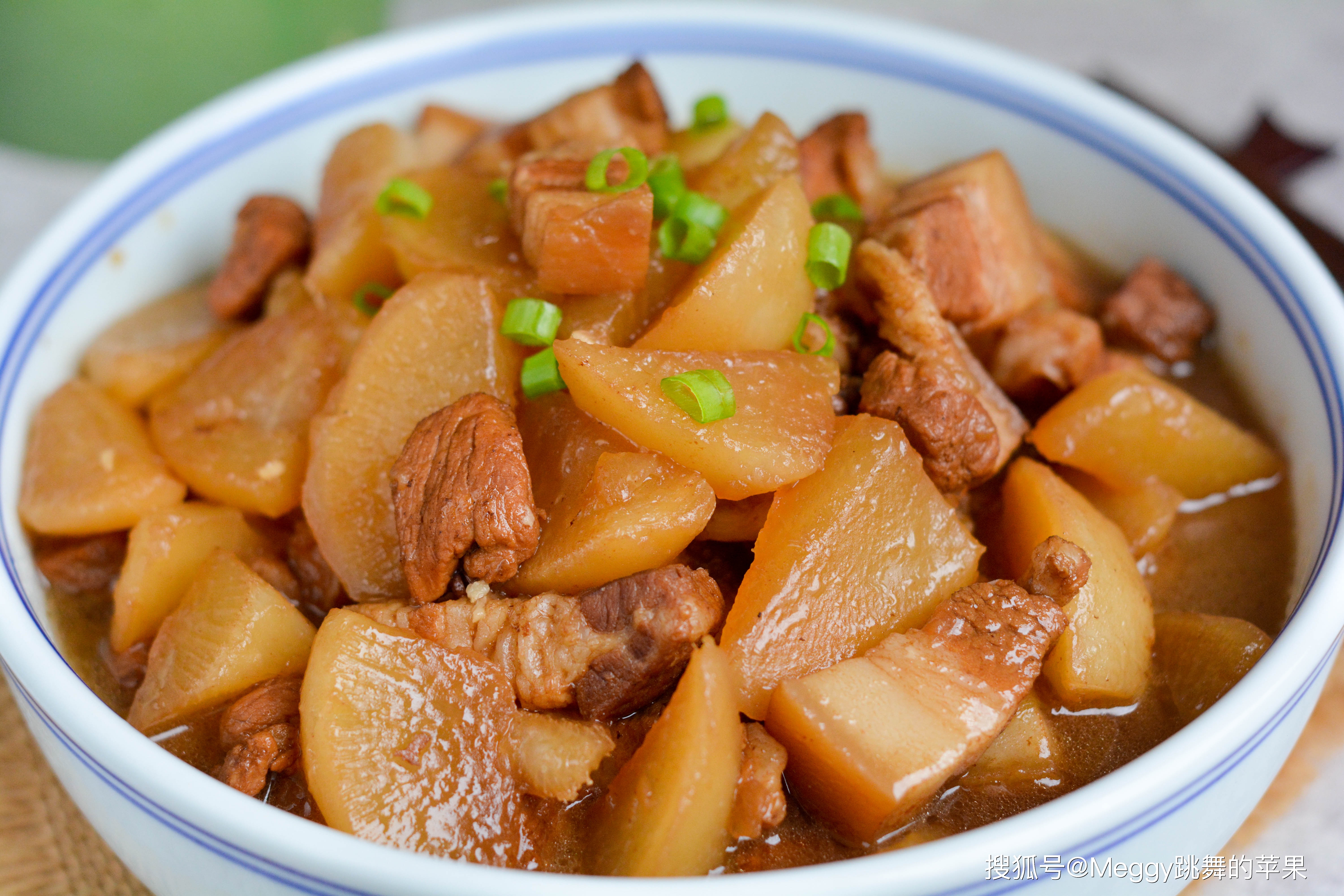
White radish + pork: When cooking braised pork with white radish, it can reduce the greasy feeling, nourish yin and moisturize dryness, which is suitable for friends with dry skin, dry throat and dry mouth.
Braised pork with radish
Ingredients: 200-300 grams of pork belly with skin, a small amount of spices (pepper, star anise, fennel, cinnamon), 2 scallions, a little ginger, soy sauce, white sugar, white wine, sesame oil, peanut oil, and salt.
Steps: 1. Wash the pork belly and cut it into pieces. Blanch it in water and then cool it down. Marinate it with soy sauce, sugar and sesame oil for 30 minutes. Wash and cut the white radish into pieces.
2. Heat peanut oil and ginger in a pot, pour the pork belly and the marinade into the pot and stir-fry. Add shallots, spices and white wine and stir-fry for a while.
3. Add an appropriate amount of water, boil it over high heat, then simmer it over low heat for 20 minutes. Add the white radish and cook until the white radish and pork are cooked. Turn to high heat to reduce the sauce and add a little salt to taste.
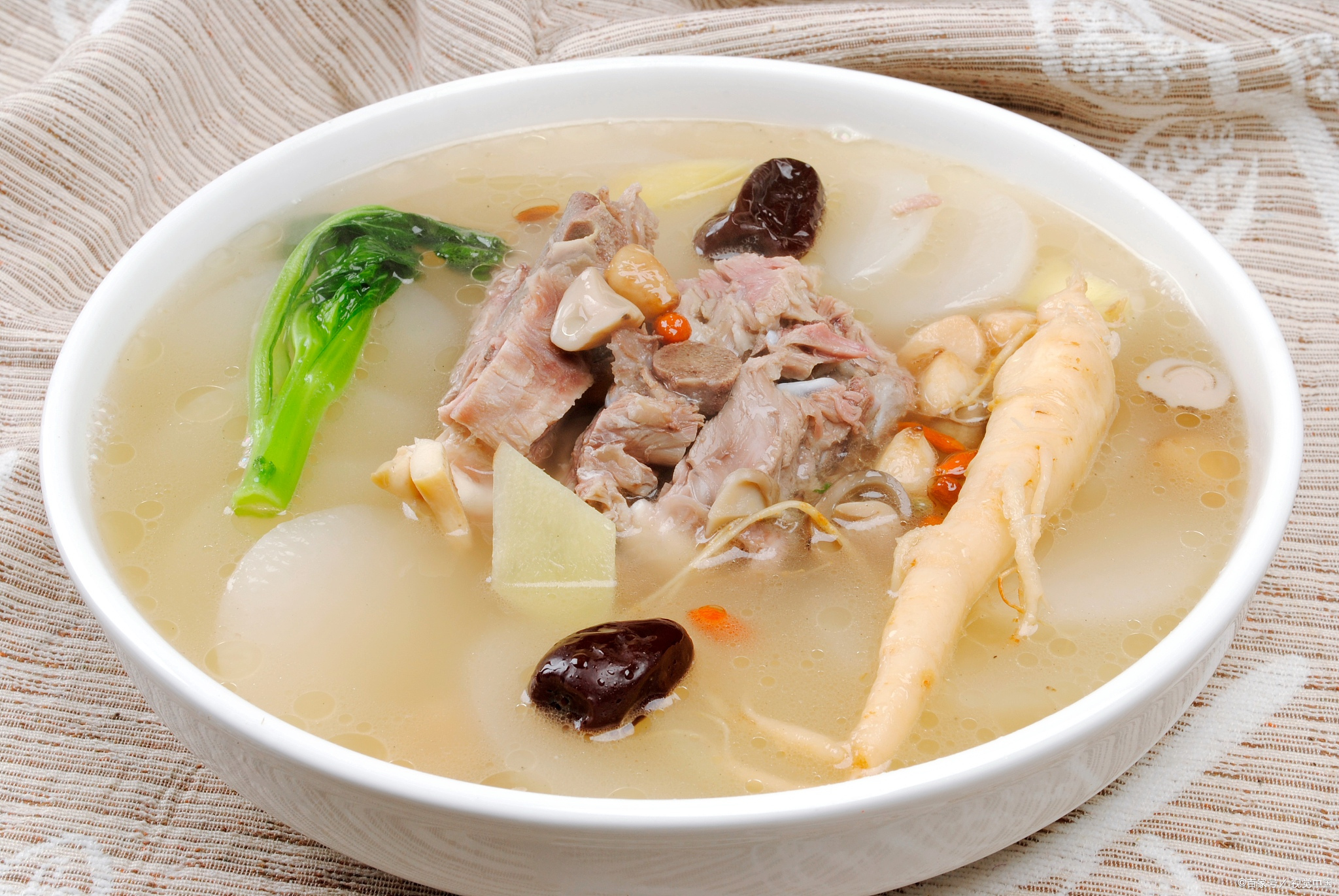
White radish + mutton: Eating mutton in autumn and winter can dispel coldness, warm the heart and stomach, and can also replenish qi and blood, nourish the liver and improve blood circulation. The combination of the two can be used as an auxiliary diet therapy for patients with tuberculosis and bronchiectasis.
Radish and Lamb Soup
Ingredients: Prepare 1000g green or white radish, 500g mutton, appropriate amount of onion, ginger, rice wine, refined salt and MSG.
Steps: 1. Wash the mutton, remove the fascia, cut into small cubes, boil with cold water, blanch to remove blood, and wash.
2. Wash and peel the radish, cut into dice and blanch for later use.
3. First put the mutton into the pot, add appropriate amount of water and onion, ginger and rice wine, and simmer until half cooked.
4. Then put the radish in, simmer over low heat until crispy, add seasoning, and serve.
White radish + onion: Winter is the season when colds and flus are common. Use white radish and scallion white, which has the effect of dispelling cold, to relieve the cold and prevent colds.
Two White Soup
Ingredients: 15g scallion white, 30g white radish, 3g coriander.
Method: Wash the above three ingredients, add appropriate amount of water to boil, and drink while hot.

Other radish diet recipes
Honey roasted radish
Ingredients: 200g radish, appropriate amount of honey.
Method: Wash the radish, cut it into slices one finger thick, dip both sides in honey, put it in a pan and roast it over low heat until it is cooked but not burnt, chew it after cooling, and take it with light salt water, and eat it in 3 times a day.
Effects: It comes from "Puji Fang", which has the effects of diuresis, stranguria, digestion, qi, and qi accumulation. "Puji Fang" says: "Crush the radish, fry it with honey, chew it carefully, and treat vomiting."
Radish porridge
Ingredients: 100g radish, 50g polished rice.
Method: Wash and cook the radish, squeeze the juice with a clean gauze, add the washed polished rice, boil it over high heat, and then simmer it over low heat into porridge.
Efficacy: From "Yinshi Zhengyao", it has the effects of clearing heat and promoting body fluid, opening the diaphragm and smoothing the qi, strengthening the stomach and intestines, and can be used for diabetes.
Radish dish
Ingredients: 100g radish, 3g ginger, vinegar and refined salt.
Method: Wash and chop the ginger for later use, wash and cut the radish into shreds, cook until soft, add ginger rice, light vinegar and refined salt to mix.
Efficacy: From "Shouqin Laoyang Xinshu", it has the effect of cooling blood and stopping bleeding, and can be used for alcohol-induced bleeding, which does not stop for ten days, etc.
Two-flowered radish honey syrup
Ingredients: 10g each of loofah flower, magnolia flower and radish shreds, 15g honey.
Method: Put loofah flower, magnolia flower and radish shreds in a large teacup, soak in boiling water for 15 minutes, add honey and stir well, and drink hot frequently.
Efficacy: From "Chinese Health Diet Encyclopedia", it has the effects of clearing heat and promoting lung function, descending adverse effects and resolving phlegm. It is used for chronic bronchitis with Yin deficiency and phlegm-heat syndrome, with chest tightness, cough, yellow and sticky phlegm, etc.
Onion and Radish Soup
Ingredients: 1 chicken skeleton, half an onion, 1 northern scallion (white), half a white radish, appropriate amount of coriander and pepper powder.
Method: 1. Wash the ingredients, cut the onion and scallion into shreds, and cut the radish into dice. 2. Add appropriate amount of water to the pot and boil, first add the chicken skeleton and cook for 30 minutes. 3. Take out the chicken skeleton, add onion, scallion and radish and cook for another 5 minutes, and finally add coriander, pepper and salt to taste.
Effects: Radish, "Sui Xi Ju Diet" states, "Raw radish is pungent, sweet and cool, moisturizes the lungs and resolves phlegm, dispels wind and heat. It can treat various throat diseases, cough and aphonia, constipation, detoxification, eliminate alcohol poisoning, eliminate tofu accumulation, and kill fishy smell. Cooked radish is sweet and warm, can lower qi and harmonize the middle, nourish the spleen and transport food, produce body fluids, resist wind and cold, make people fat and healthy, have turbidity, nourish the fetus and blood, and is suitable for all diseases. It is a holy product among vegetables." It has the reputation of being a holy fruit and vegetable, and has a good regulating effect on respiratory and digestive tract discomfort. Cook a pot of soup with onions and green onions to clear the lungs, relieve the symptoms, moisten the intestines and clear the bowels. Warm consumption can help improve nasal congestion and runny nose, throat discomfort, fatigue, loss of appetite, abdominal distension, constipation and other diseases, especially suitable for the initial onset of wind-cold or gastrointestinal colds.
Tips: There are many types of radishes, and the ones with firm and no tendons, smooth skin and fat meat are the best.
These people should not eat white radish often
There are many benefits to eating white radish, but we need to remind everyone that there are some rules for eating white radish in autumn and winter, and a reasonable diet can better exert its effects.
For people with weak spleen and stomach, chronic bronchitis and asthma, it is best not to eat white radish often.
In addition, white radish should not be eaten with tonics, such as Codonopsis pilosula and Astragalus membranaceus.


