As the weather gradually warms up, many people will prefer fruits with sufficient water content. In hot weather, taking a bite of "juicy" fruit is really sweet and thirst-quenching. Speaking of fruits with sufficient water content, honeydew melon is completely worth mentioning, and it tastes very "fragrant" and is not expensive. It is really affordable! In this article, let's talk about honeydew melon.
As the weather gradually warms up, many people will prefer fruits with sufficient water content. In hot weather, taking a bite of "juicy" fruit is really sweet and thirst-quenching.
Speaking of fruits with sufficient water content, honeydew melon is completely worth mentioning, and it tastes very "fragrant" and is not expensive. It is really affordable! In this article, let's talk about honeydew melon.
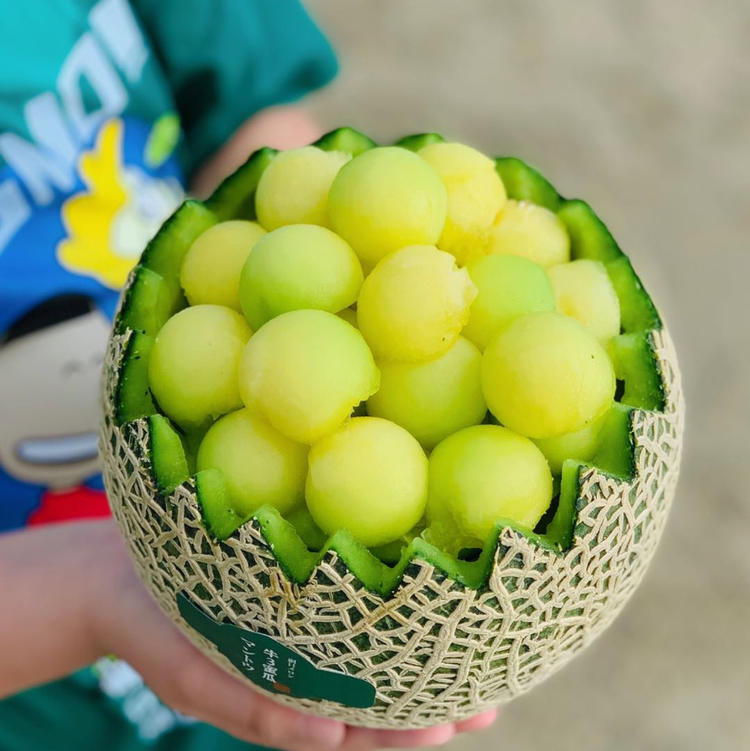
How nutritious is honeydew melon?
Honeydew melon is what we usually call melon, also called musk melon, which is a plant of the genus Cucurbitaceae. In cultivation, it can be divided into thick-skinned melon and thin-skinned melon. Among them, thin-skinned melon is Chinese melon, oriental melon or musk melon, etc., with excellent taste.
The aroma of honeydew melon is particularly captivating. There are more than 200 kinds of aroma substances in different varieties of honeydew melon fruits, including esters, alcohols, aldehydes and volatile terpenes, among which esters are its characteristic aroma substances. The more mature the honeydew melon, the stronger the aroma.
As for the nutrition of honeydew melon, the most prominent feature is its sufficient water content, which is almost above 90%, making it a veritable hydration helper!
The potassium content of honeydew melon is medium among fruits, mostly about 150 mg/100 g, and some can reach about 300 mg/100 g. The potassium content of the Wangwu variety of honeydew melon in Hainan is higher, at 400 mg/100 g. Eating 100 g can meet 20% of the daily potassium requirement of an average adult, which is beneficial to the health of blood pressure.
In addition, the flesh of honeydew melon has dark and light colors. Carotenoids are the main pigment substances that form the orange color of honeydew melon flesh. This ingredient is very beneficial to eye health and also has an antioxidant effect. The carotenoid content of honeydew melons with different flesh colors is different, and the difference is significant. The orange-red flesh type has the highest content, followed by the light orange-red flesh type, and the white flesh type has the lowest content.
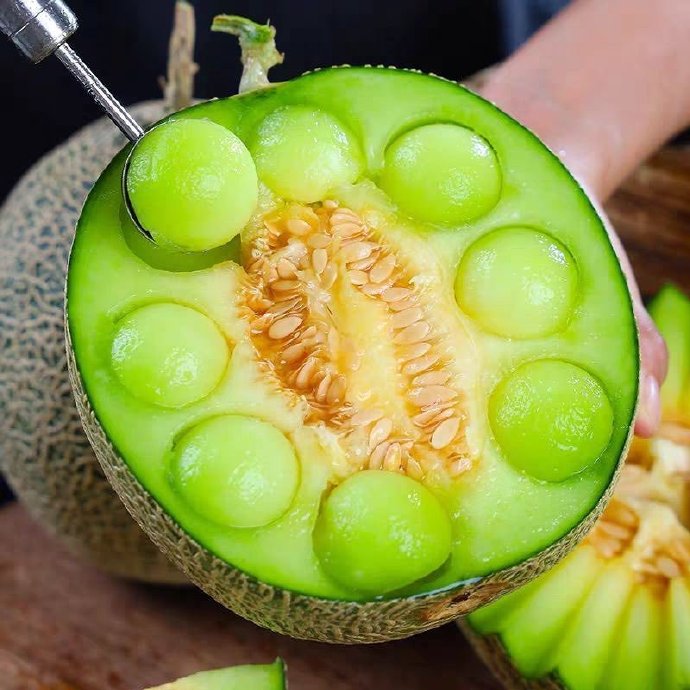
Honeydew melon is very sweet, but the calories are very low
Honeydew melon tastes very sweet, so many people think it has high calories. In fact, the calories of honeydew melon are mostly very low, almost no more than 40 kcal/100g, which is lower than the oranges, apples, grapes, etc. that we usually eat.
According to the data in the "Chinese Food Composition Table", the calories of Hami melon are 34 kcal/100g, while the calories of Lingmi melon are only 4 kcal/100g, which is really friendly for people who want to lose weight!
As for why honeydew melon is so sweet, it is mainly because the sugar content of honeydew melon is composed of fructose, glucose and sucrose, among which fructose content is relatively rich. The total sugar content of yellow-skinned melon is 4.4g/100g, of which fructose content is 1.9%, glucose is 1.5%, and sucrose is 1%. Fructose is the sweetest of these sugars and has the characteristics of cold sweetness. When the temperature is below 40℃, the lower the temperature, the sweeter the taste.
Therefore, friends who often eat honeydew melon will find that the same honeydew melon tastes sweeter after being refrigerated compared to when stored at room temperature.
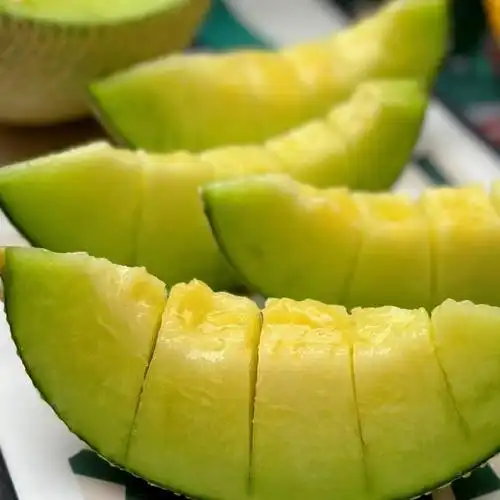
Diabetes can also eat honeydew melon
Many people think that the GI value (glycemic index) of honeydew melon is relatively high, so many diabetic patients dare not eat honeydew melon.
In fact, even if blood sugar is high, you don’t have to completely reject the deliciousness of honeydew melon. Although the GI value of honeydew melon is higher than that of apples, pears, peaches, plums, cherries, pineapples, etc., the sugar content of honeydew melon is generally low. When we look at the impact of a food on blood sugar, we can’t just look at the GI value, but also consider the GL (glycemic load). GL less than 10 is a low GL food, which means that the impact on blood sugar is small.
GL=available carbohydrates in food (g) × GI ÷ 100
Take the Hami melon that everyone often eats as an example. The GI value of Hami melon is as high as 70, which can be regarded as a high GI fruit, but its carbohydrate content is only 7.9 g/100 g, and the insoluble dietary fiber is 0.2 g/100 g. After calculation, the GL of eating 100 g of Hami melon is only 5.39, which is a low GL fruit. In other words, eating 100 g of Hami melon will not cause a big fluctuation in blood sugar for diabetic patients.
Selection of honeydew melon
Now is the time to eat honeydew melon, and many friends are eager to try it. How to choose honeydew melon is the top priority.
There are many varieties of honeydew melon. If you want to buy delicious ones, it is very important to choose the right variety. Xiangfei Xiaomi, Beihai No. 1, Jinlong, Yangjiao Mi, Xizhou Mi, these varieties taste sweeter. Generally speaking, Xinjiang has long sunshine hours in summer, large temperature difference between day and night, and little rainfall, and the honeydew melons grown there taste good.
In addition, the flesh of Xizhou honey melon is orange-red, the flesh of Hongxincui and Huanghe honey melon is orange-red, the flesh of Zhongtian, Beihai No. 1, Milk Honey, and Jinxiangyu honey melon is white, the flesh of Fengjin No. 6 and Xiangfei Xiaomi is yellow, and the flesh of Yangjiao honey and Koukou honey is green. You can give priority to the dark flesh.
Honeydew melon is a respiratory climacteric fruit. If it is not ripe when you buy it, you can put it together with other ripe fruits to ripen it, such as bananas and apples.
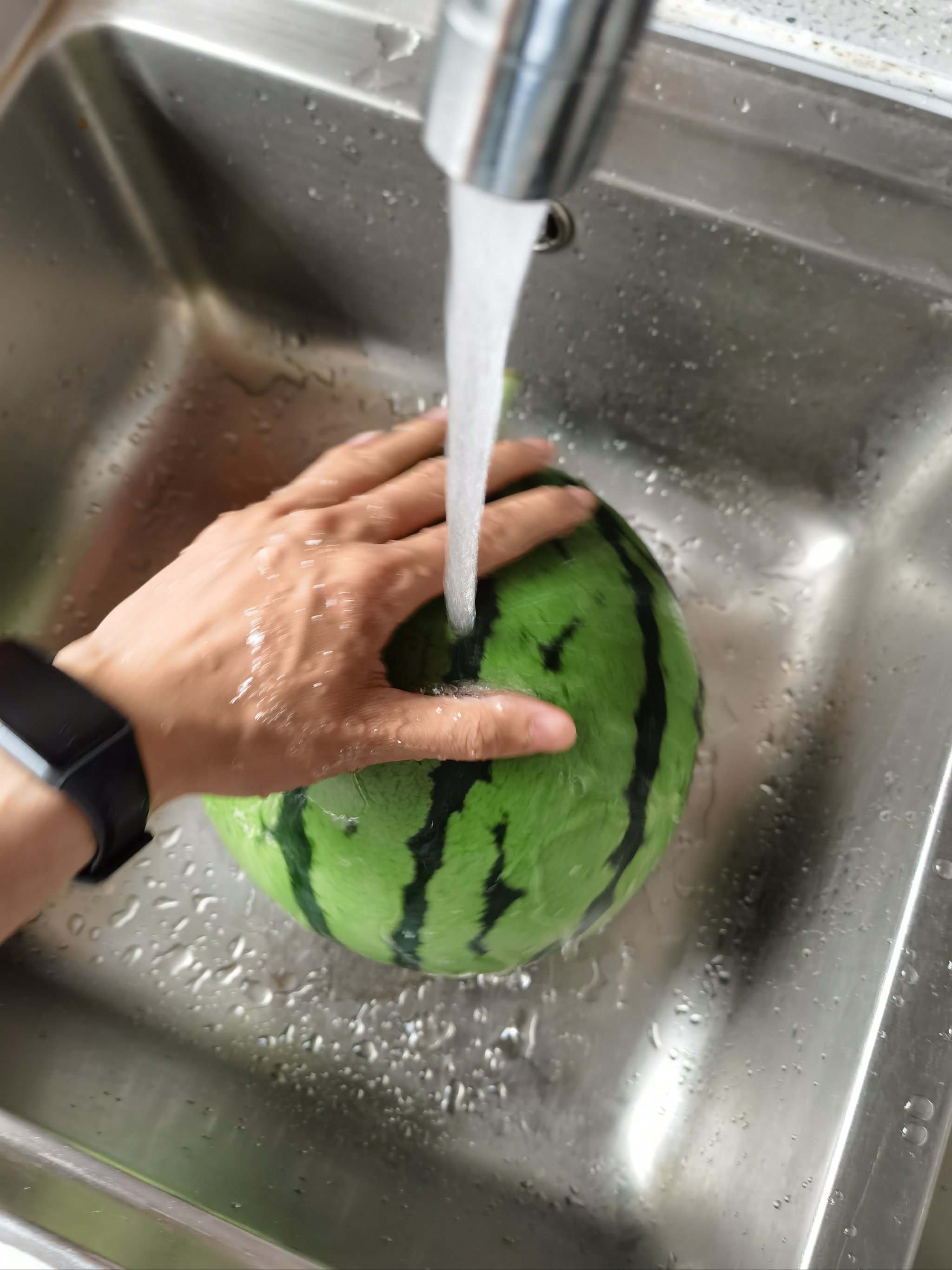
Wash the skin even if you don’t eat it!
Most people don’t wash honeydew melons when they eat them. They just cut them and eat them directly. Doing so poses a risk of food poisoning. Honeydew melons may carry Listeria, commonly known as the "refrigerator killer". Listeria is a bacteria that is more harmful. After infection, vomiting, diarrhea, fever, muscle aches, etc. will occur. Severe cases can lead to coma, shock and death.
The surface of Hami melon is rough and wrinkled, and Listeria is a common bacterium in the soil, so Hami melon is a fruit that is easily infected.
For safety reasons, before eating Hami melon, you need to scrub the entire surface of the Hami melon with a clean brush under running water, then cut it and eat it, and it is recommended to eat it as soon as possible.
The weather is getting hotter and hotter, so hurry up and prepare the honeydew melon that is as sweet as honey and full of water! It is so refreshing to replenish water, vitamin C, potassium, and carotene! Remember to refrigerate it before eating it for a sweeter taste!
However, it should be noted that even if it tastes good, you cannot eat it without restraint. If you plan to eat honeydew melon as fruit all day, it is recommended to control it between 200 grams and 350 grams, that is, eat at most 3 palms.
In addition, if you have symptoms such as itching, tingling, and swelling of the lips, mouth, or throat after eating honeydew melon, it means that you are likely allergic to honeydew melon. People who are allergic to honeydew melon are advised to try not to eat it.


