In the process of fitness and fat loss, diet control is one of the key factors. Many people face confusion when choosing fruits, especially fruits like watermelon that are rich in water and taste sweet. With the surge in demand for weight loss in summer, watermelon juice has become a new favorite for weight loss with the labels of "low calorie" and "natural".
In the process of fitness and fat loss, diet control is one of the key factors. Many people face confusion when choosing fruits, especially fruits like watermelon that are rich in water and taste sweet. With the surge in demand for weight loss in summer, watermelon juice has become a new favorite for weight loss with the labels of "low calorie" and "natural". However, different voices have been heard in the nutrition community: hidden dangers of high sugar, loss of nutrition, risk of replacing regular meals... Is watermelon juice a popular drink or a weight loss trap?
Low calorie and high water content: the weight loss advantage of watermelon juice
The core weight loss value of watermelon juice is based on two major physiological characteristics:
1. Extremely low calorie density
Each 100 ml of pure watermelon juice contains only 25-30 kcal and about 6-8 grams of carbohydrates. Compared with common drinks:
- Orange juice: 45 kcal/100ml
- Coke: 42 kcal/100ml
- Whole milk: 62 kcal/100ml
Replacing high-calorie beverages can significantly reduce daily energy intake and has a positive significance for weight control.
2. High water content and satiety
Watermelon juice contains more than 90% water, which can quickly fill the stomach and suppress hunger through vagus nerve signals. Studies have shown that drinking 200ml of watermelon juice before a meal can reduce the amount of food consumed during a meal by about 15%.
| Calorie comparison between watermelon juice and common fat-reducing drinks |
| Drink (100ml) |
Calories (kcal) |
Carbohydrates (g) |
Satiety index★ |
| Watermelon juice |
25-30 |
6-8 |
★★★☆ |
| Celery juice |
16 |
3 |
★★ |
| Skimmed milk |
35 |
5 |
★★★ |
| Iced American coffee |
2 |
0 |
★ |
Overlooked active ingredients
1. Metabolic regulation of citrulline (L-Citrulline)
Each 200ml of watermelon juice contains 150-250mg of citrulline. This amino acid affects metabolism through two pathways:
- Promote nitric oxide synthesis → dilate blood vessels → increase muscle blood oxygen supply during exercise → increase fat oxidation efficiency;
- Accelerate lactic acid clearance → relieve post-exercise soreness → increase training frequency and intensity.
An experiment at the University of Cartagena in Spain confirmed that subjects who drank watermelon juice one hour before exercise had a 19% increase in muscle recovery rate within 24 hours.
2. Potassium's "de-edema" effect
Rich potassium (110-150mg/100ml) can antagonize sodium ions, regulate cell osmotic pressure balance, and promote water excretion. It significantly improves edema-type puffiness in women before menstruation and those who eat a high-salt diet.
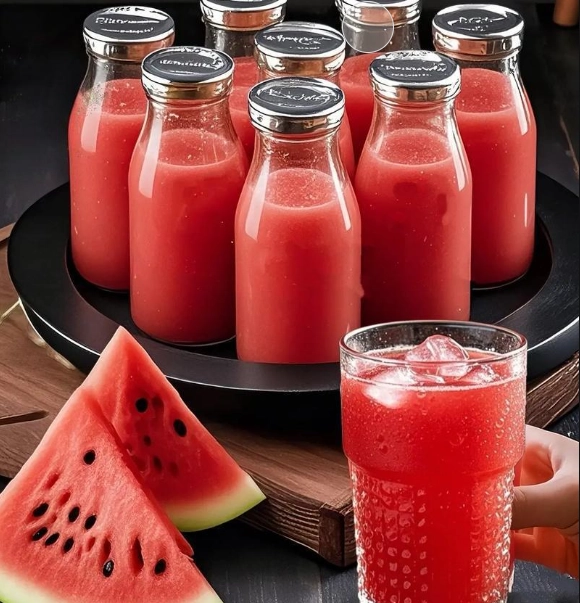
Sugar Trap: When a Weight Loss Tool Becomes a Fat-Gaining Pusher
Despite the above advantages, the weight loss effect of watermelon juice is easily overturned by the way it is consumed:
1. The metabolic peculiarity of fructose
The sugar in watermelon juice is mainly fructose, and its metabolic pathway is different from that of glucose:
- It does not stimulate insulin secretion → seemingly "low glycemic index" (GI value 72);
- But it is directly converted into triglycerides in the liver → promotes visceral fat accumulation.
Clinical Tips: Daily intake of more than 50g of fructose (about 600ml of watermelon juice) will significantly increase the risk of fatty liver.
2. Fatal loss of dietary fiber
The juicing process destroys the fiber structure of watermelon:
- 100g of watermelon contains 0.3g of cellulose → only 0.1g remains after juicing (close to 0 after filtering the residue);
- Without fiber buffering, the sugar absorption rate soars, and the blood sugar fluctuation range increases by 3 times.
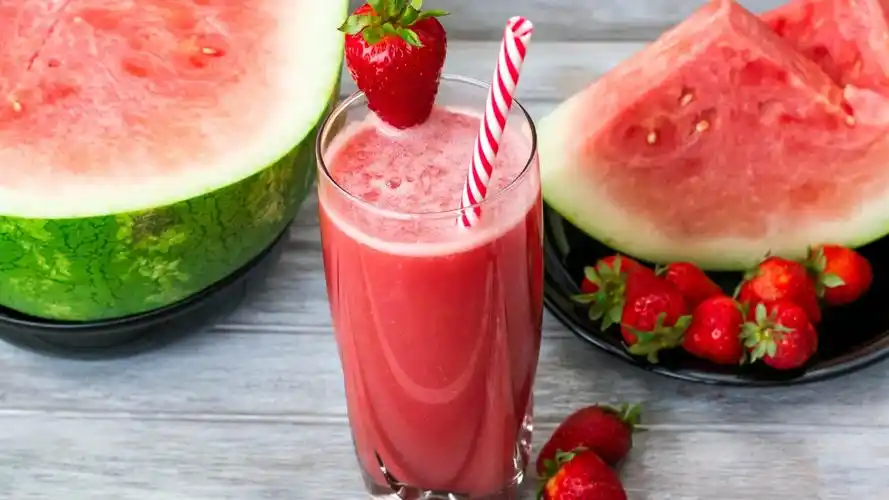
Scientific drinking strategy: Let watermelon juice really serve weight loss
- Strictly control the dosage: no more than 200ml per day, equivalent to 1 cup of ordinary glass;
- Mix with protein/fiber: add 10g chia seeds or half a spoon of whey protein powder to delay sugar absorption;
- Refuse to be chilled: below 4℃ will inhibit the activity of digestive enzymes and cause bloating (especially those with spleen and stomach deficiency);
- Exercise association method: drink 1 hour before exercise to maximize the metabolic gain of citrulline.
Three groups of people should drink with caution
- Diabetes patients: glycemic load (GL) reaches 12/cup (≥10 is high GL);
- Irritable bowel syndrome patients: high FODMAP components induce bloating and diarrhea;
- Renal insufficiency: risk of hyperkalemia.

Reasonable positioning of watermelon juice in weight loss
The glycemic index of watermelon ranks first among all fruits, as high as 72. Therefore, many weight loss recipes exclude watermelon. In fact, the carbon water content of watermelon is very low, less than 7g per 100g, and most of it is water!Although watermelon has a high glycemic index, its glycemic load is very low. This means that as long as you don't eat a lot at once, it will not have a negative impact on weight loss.
Appendix: Alternatives to healthy fat-reducing drinks (optimized according to WHO recommendations)
|
Demand scenarios
|
Preferred drinks
|
Secondary options
|
Drinks to avoid
|
|
Daily thirst quenching
|
Lemon water/light tea
|
Sugar-free coconut water
|
Juice, soda
|
|
Rehydration after exercise
|
Electrolyte water
|
Watermelon juice (≤200ml)
|
High-sugar sports drinks
|
|
Pre-meal appetite suppression
|
Chia seeds soaked in water
|
Tomato juice (no additives)
|
Sugary yogurt drinks
|
|
Replace sweets addiction
|
Cold brew oolong tea + sugar substitute
|
Soy milk latte (sugar-free)
|
Sugary milk tea
|


